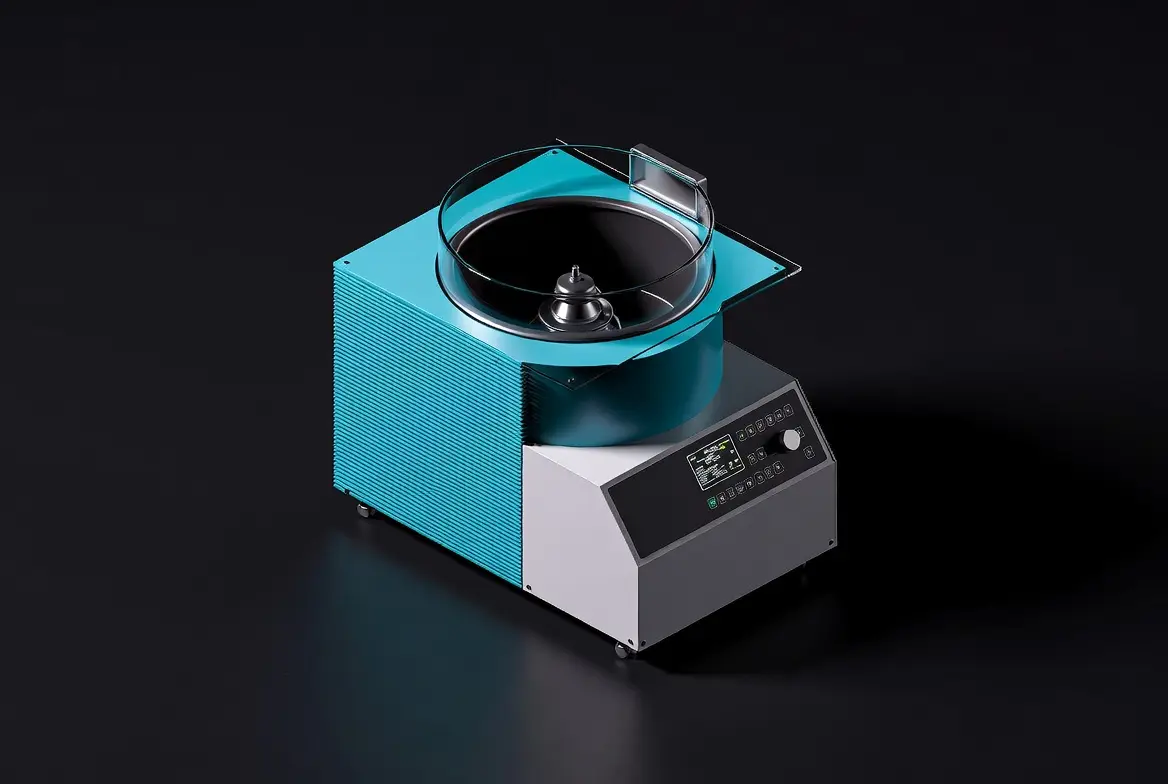
Buying used laboratory equipment in Switzerland can deliver significant savings and much shorter lead times than ordering new instruments. A well-maintained refrigerated centrifuge, ultralow freezer or PCR thermal cycler often still has years of reliable service left. The difficulty is finding a channel that controls the real risks: unknown origin, missing decontamination documentation, unclear condition and weak commercial protection.
Lab2Lab is the Swiss B2B marketplace for certified second-hand laboratory equipment. It is operated by Labgene Scientific SA from Châtel-Saint-Denis and applies professional review, transparent origin labelling, risk-based sanitary rules and Swiss-compliant invoicing to every listing.
This guide explains why second-hand laboratory equipment is becoming strategic for Swiss labs, what the most common pitfalls are, and how a specialised marketplace changes the equation.
Why Swiss laboratories are turning to second-hand equipment
Three practical forces are driving demand:
1. Cost control
New laboratory instruments remain expensive. A certified second-hand refrigerated centrifuge or ultralow freezer typically costs substantially less while still delivering the performance required for most research and diagnostic applications. The budget saved can be redirected to consumables, staff or additional capacity.
2. Availability
Lead times for new equipment can stretch over several months. A second-hand unit already located in Switzerland is often available within days or a few weeks.
3. Circular economy and sustainability
Laboratories generate significant volumes of still-functional equipment. Giving these instruments a second life reduces waste and resource consumption — an increasingly important consideration for universities, public research institutes and industry partners in Switzerland.
The opportunity is real. The risks are also real if the purchase channel is not structured.
Common mistakes when buying second-hand laboratory equipment
Most problems encountered by laboratories fall into a small number of recurring mistakes:
- Accepting vague condition descriptions ("good working order") without serial number, year of commissioning or service history
- Ignoring the need for a decontamination certificate on centrifuges, PCR systems, incubators and biological safety cabinets
- Buying from private sellers or open classifieds without clear origin or contractual protection
- Underestimating logistics and installation constraints (weight, access, packaging)
- Focusing only on the purchase price and discovering later that warranty, documentation or compliance is missing
These mistakes are avoidable when the marketplace itself enforces minimum standards before a listing is published.
Comparison: open channels vs a professional Swiss marketplace
| Criterion | Open classifieds / private sales | International marketplaces | Lab2Lab (Swiss B2B) |
|---|---|---|---|
| Professional review before publication | Rarely | Variable | Mandatory for every listing |
| Transparent origin | Often unclear | Variable | Always clear (Labgene or Third-party) |
| Decontamination documentation | Frequently missing | Depends on seller | Required according to risk level |
| Swiss invoicing & VAT treatment | Often problematic | Cross-border complexity | CHF, Swiss law, 8.1 % VAT handled |
| Local logistics | Buyer arranges everything | Variable | Adapted options (pickup, parcel, pallet) |
| Recourse in case of problem | Limited | Limited | Professional Swiss operator |
| Data location | Unknown | Often outside Switzerland | Switzerland (nFADP) |
← Scroll to compare →
The table shows why a specialised local operator changes the risk profile for anyone looking to buy used laboratory equipment safely in Switzerland.
What a professional marketplace must provide
A serious platform for second-hand laboratory equipment in Switzerland should deliver at least the following:
- Mandatory human review of every listing before it goes live
- Clear origin labelling (own stock versus third-party)
- Risk-based sanitary requirements
- Transparent pricing with no hidden fees
- Swiss-compliant invoicing and contractual framework
- Logistics options adapted to laboratory instruments
- Data hosted under Swiss rules
Anything less leaves the buyer carrying most of the residual risk.
How Lab2Lab is structured
Lab2Lab is operated by Labgene Scientific SA, a company with 30 years of experience serving Swiss molecular biology and research laboratories. The platform applies four practical safeguards:
1. Professional review before publication
Every listing is checked by the Labgene team for completeness, consistency and technical relevance. Incomplete or unclear submissions are returned for correction. This is the opposite of an open classifieds model.
2. Transparent origin
Each unit is clearly labelled:
- Sold by Labgene — equipment owned and processed by Labgene Scientific SA, with its quality process and warranty
- Third-party — equipment from a verified professional seller, sold as is, with Labgene acting as intermediary
Buyers always know who owns the instrument and which rules apply.
3. Risk-based sanitary compliance
Not every instrument carries the same risk. Lab2Lab uses a practical scale:
- Unused / new-old-stock → simple declaration that the unit never contacted hazardous substances
- Used – non-hazardous → declaration of use without biological, chemical or radioactive exposure
- Used – potentially hazardous (refrigerated centrifuges, PCR thermal cyclers, incubators, biological safety cabinets, ultralow freezers used with biological samples, etc.) → full decontamination protocol and signed certificate required before publication
4. Swiss legal and logistics framework
- Invoicing in CHF under Swiss law
- Correct treatment of Swiss VAT (8.1 %) when applicable
- Data hosted in Switzerland under the nFADP
- Logistics adapted to laboratory equipment: on-site pickup, light parcels under 30 kg, pallet delivery or special handling on quote
Two commercial models are available: Labgene can purchase the equipment for resale, or act as introducer between seller and buyer while invoicing its fixed 20 % commission. Public prices already include the commission (and VAT when applicable).
See the full process on the How it works page
Practical buyer checklist for second-hand laboratory equipment
Before purchasing any used instrument, verify the following points:
- Clear origin (Sold by Labgene or Third-party)
- Serial number and year of commissioning
- Condition description that goes beyond vague adjectives
- Presence of the required decontamination documentation for the equipment type
- Warranty terms (if any)
- Whether the displayed price already includes commission and applicable VAT
- Logistics and delivery conditions compatible with your laboratory site
Lab2Lab is designed so that these elements are visible on every listing.
For sellers: preparing surplus laboratory equipment
Laboratories, universities and companies that want to recover value from surplus, demo or decommissioned instruments should prepare:
- Accurate brand, model and serial number
- Year of commissioning and approximate usage history
- Clear, well-lit photographs (overall view + key details)
- Honest condition description
- The appropriate sanitary declaration or decontamination certificate
A structured submission followed by professional review significantly increases the probability of attracting serious laboratory buyers rather than speculative inquiries.
Equipment categories covered
Lab2Lab focuses on the technical families most frequently needed by research, diagnostic and biotech laboratories in Switzerland, including:
- Refrigerated and ventilated centrifuges
- Thermal cyclers and real-time PCR systems
- Ultralow freezers and cold storage
- Spectrophotometers and plate readers
- Biological safety cabinets and laboratory ventilation
- Laboratory furniture and related equipment
The catalogue is organised across more than 100 technical subcategories and continues to expand.
FAQ — Second-hand laboratory equipment in Switzerland
FAQ
Is it safe to buy used laboratory equipment?
What is the difference between "Sold by Labgene" and "Third-party"?
Do I need a decontamination certificate for a centrifuge or PCR system?
Is invoicing handled under Swiss law?
Can I sell surplus laboratory equipment through Lab2Lab?
Conclusion
Second-hand laboratory equipment only creates real value when the classic risks are controlled. Open classifieds and private sales leave too many critical points unresolved. A specialised Swiss B2B marketplace that combines mandatory professional review, transparent origin, risk-based sanitary rules and compliant invoicing changes the risk profile for both buyers and sellers.
Lab2Lab was built for this purpose by Labgene Scientific SA, a company that has served Swiss laboratories for 30 years.